April 2026
Engineering Tips: Wind & Tornado Load Changes for ASCE 7-22
The International Building Code (IBC) is updated on a three-year cycle, with IBC 2024 being the most recent edition. This version references the American Society of Civil Engineers’ ASCE 7-22 standard, Minimum Design Loads and Associated Criteria for Buildings and Other Structures. The transition from ASCE 7-16 ( IBC 2018 and IBC 2021) to ASCE 7-22 (IBC 2024) includes notable changes to wind and tornado load requirements.
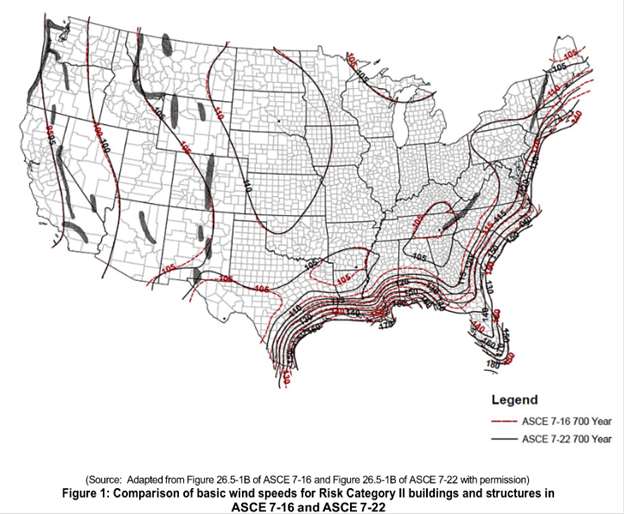
Basic Wind Speed Maps: The basic wind speed maps have been revised. The bulk of these revisions occur in hurricane-prone areas. From FEMA’s Fact Sheet, ‘Highlights of Significant Changes to the Wind Load Provisions of ASCE 7-22’, Figure 1, we see the new contours in BLACK compared to ASCE 7-16’s contours in RED. Figure 1 is for Risk Category II buildings and structures. Similar changes have been made to the wind speed maps for Risk Category I, III and IV.
Wind-borne Debris Region (WBDR): Areas in hurricane-prone regions where the basic wind speed is equal to or greater than 140 mph remain defined as being within a WBDR. However, the verbiage for an area in a hurricane-prone region where the basic wind speed is equal to or greater than 130 mph but less than 140 mph has been revised. This is now defined as being within a WBDR if it is within 1 mile (1.6 km) of the mean high water line where an Exposure D condition exists upwind of the water line.
Buildings with Gable and Hip Roofs with Slopes Greater than 7 degrees: The roof wind zones have been simplified and some adjustments have been made to the component and cladding pressure coefficients.
Additional information and description of other wind load changes can be found at the FEMA website.
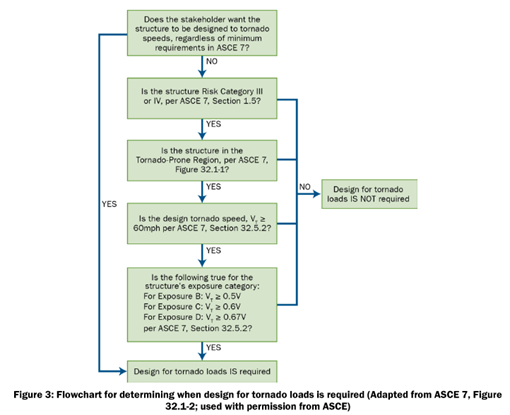
Tornado Loads: Consideration of tornado loading has been included in this code cycle. A flowchart has been developed to aid in determining if a building or structure is required to be designed for tornado loading. Below is a version of the flowchart from FEMA/NIST’s ‘Design Guide for New Tornado Load Requirements in ASCE 7-22’. If the end user desires the structure to be designed for tornado loading then those requirements are to be considered. If the building or structure is classified as Risk Category III or IV, tornado loads are to be investigated further.
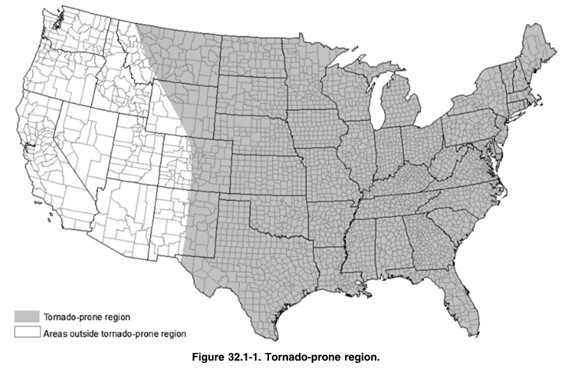
The flow chart indicates the location must be checked if it is within the tornado-prone region. The tornado prone region is defined as the shaded region of Figure 32.1-1 as shown below.
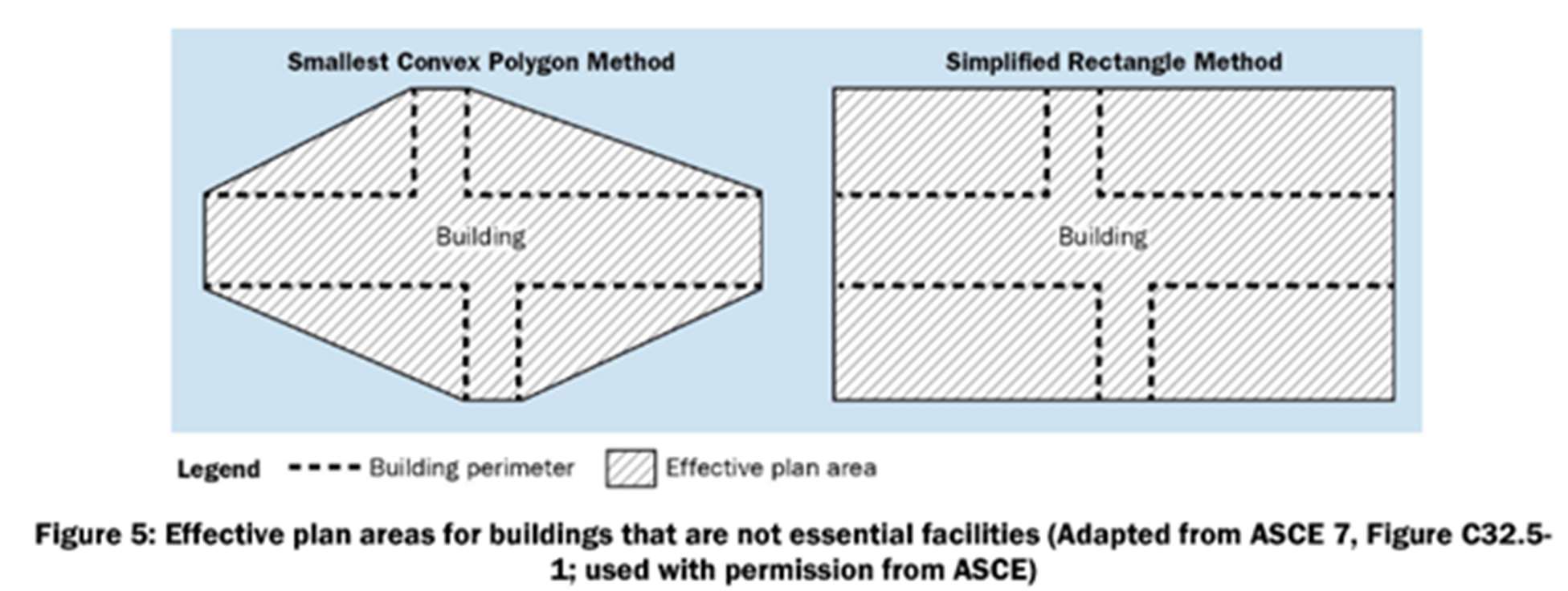
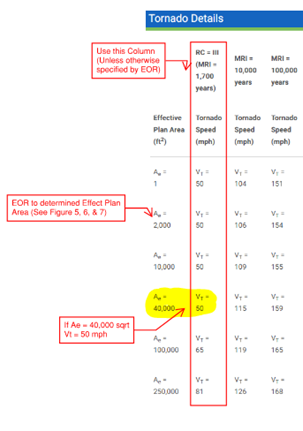
The flowchart has a check to determine if the Tornado Wind Speed, VT is greater than 60mph. To determine VT, proper site and building information is required to calculate the Effective Plan Area of a facility. The effective plan area for buildings and structures that are not considered an Essential Facility is equal to the smallest convex polygon or a ‘simplified’ smallest rectangle enclosing the plan of the building as shown in Figure 5 below from FEMA/NIST’s ‘Design Guide for New Tornado Load Requirements in ASCE 7-22’.
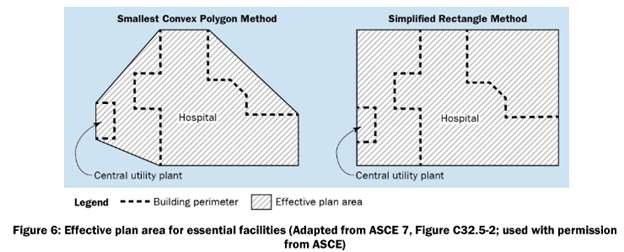
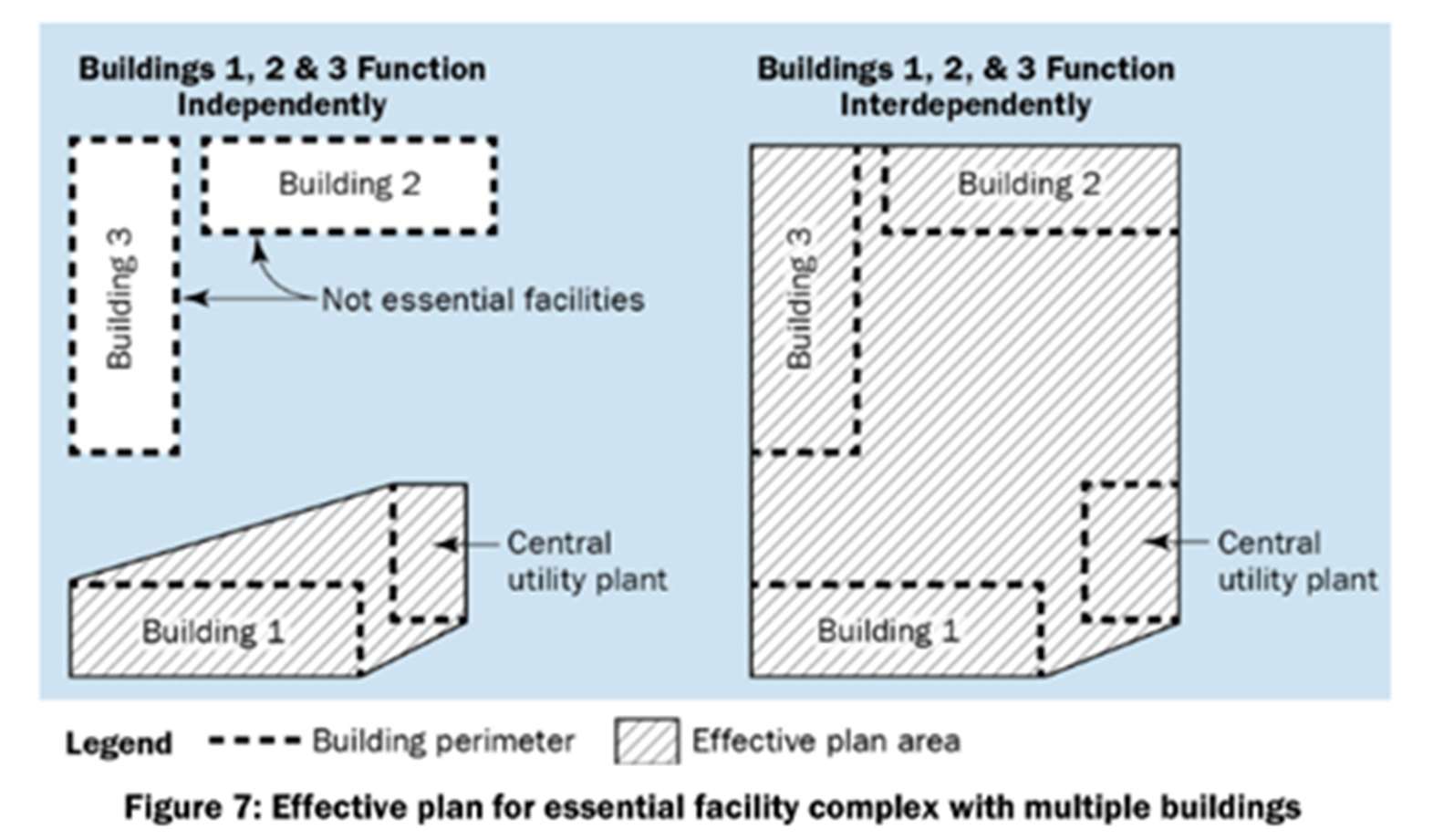
For Essential Facilities, the effective plan area includes the smallest convex polygon enclosing both the essential facility (or facilities) and all the buildings and structures required to maintain the functionality of the essential facility or facilities. Examples below are from FEMA/NIST’s ‘Design Guide for New Tornado Load Requirements in ASCE 7-22’.
The flowchart includes one more check as can be seen in Figure 3 previously displayed. Lastly, consideration for the protection of glazed openings should be dealt with the end-user and their expectations for the building or structure’s overall performance as this may impact the enclosure classification affecting the pressure coefficients.
Additional information regarding tornado wind load considerations can be found at the FEMA website.
eQuote Walkthrough
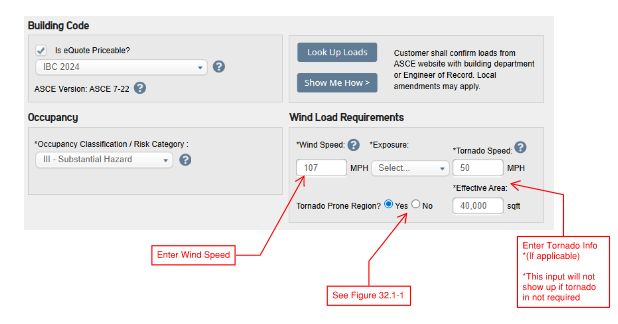
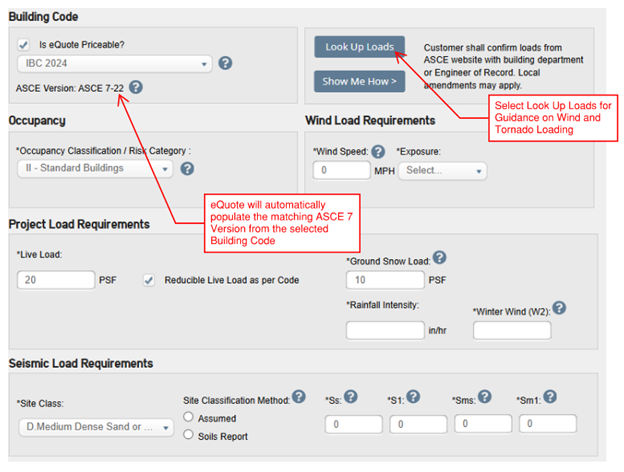
Now, we’ll outline how loading entry works in our eQuote Tool. Use these steps as a guide while entering in loading information on your project.
Building Code Entry
When it comes to loading for your project ALWAYS consult the Engineer of Record (EOR) for exact loading on your project.
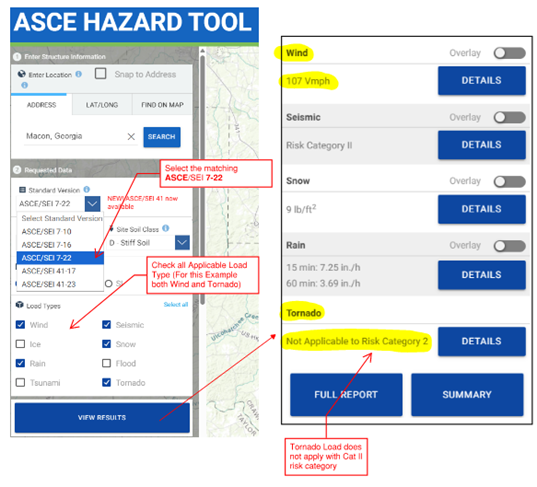
Using ASCE Hazards
Entering Information Back into eQuote